Fellows Spotlight

Zach Brooks, Ph.D.
(Green Valley, 2017)
Chief Executive Officer
UGenome AI
While a fourth-generation Arizonan might point to deep family roots, Zach Brooks, Ph.D., describes his connection to the state as rooted in aspiration — a conviction that Arizona can lead the next frontier of health innovation. A 2017 Flinn-Brown Fellow and a past participant of the Flinn Foundation Bioscience Entrepreneurship Program, Brooks has spent nearly two decades bridging academic research, Silicon Valley experience, and public-minded leadership. Today, he is the founder and CEO of UGenome AI, an emerging startup launched at the University of Arizona.
Brooks’ path spans worlds that might seem unrelated at first — bilingual decision-making research, student governance, nonprofit leadership, and health-tech entrepreneurship — but to him, they form a coherent arc. During his doctorate work at the University of Arizona, he served as Graduate Student Body President, raising funds to support graduate commercialization efforts. Combined with earlier roles in Silicon Valley and his work with World Transplant Athletes, those experiences laid the groundwork for UGenome AI, which he launched in 2023.
At its core, UGenome AI is built on the belief that genomic medicine should be as intuitive and accessible as any modern digital tool. As Brooks explains, “our vision is to make genomic medicine personal and accessible.” He imagines analyzing genomic data as simply as uploading a photo, selecting options, and clicking “analyze.” The company’s tools serve researchers, clinicians, and individuals alike, translating complex genetic data into practical insights about medication response, nutrition, and long-term health.
Yet innovation does not occur in a vacuum. Brooks emphasizes that “public policy has a huge impact on our work, as ultimately AI tools that impact health need to be evaluated at the highest levels to ensure that someone you love can trust a diagnosis or treatment supported by an AI tool.” In his view, responsible governance and emerging technology are complementary. Arizona, he believes, has an opportunity to demonstrate national leadership if policymakers, universities, and entrepreneurs align around that goal.
The clearest window into Brooks’ outlook may be a phrase he has carried since childhood, often repeated by his father: “Being positive is the only practical way to live.” The line reflects both his personal philosophy and a theme that runs through his writing. In his Discovering Your Human Algorithm series, he notes that most of us already have “the negativity covered,” so the real work becomes identifying small, repeatable steps, an “algorithm” that builds greater contentment, movement, and mindfulness. Progress, in life and in science, is cumulative.
That optimism also shapes how Brooks views community, especially the one he found through Flinn-Brown.
“We all need community,” he said. “We all need a community full of diverse and smart people.”
For Brooks, the Fellows Network offers both encouragement and perspective. “Knowing that I can find a connection within Flinn-Brown that grows each year gives me confidence.” While he jokes that his 2017 cohort is “the best,” he emphasizes that Fellows across all classes have become cherished friends and colleagues.
Professionally, he describes Flinn-Brown as a “confident door opener,” a signal that the person across the table is committed to Arizona’s long-term future. “Fantastic leaders in every guise come together in Flinn-Brown,” he says, describing a network that spans sectors yet shares a common purpose.
That shared purpose, Brooks believes, is essential to strengthening Arizona’s civic health. Drawing on his national and global perspective, he sees a significant opportunity if the state deepens coordination among government, nonprofit organizations, philanthropy, and major industry leaders, particularly in life sciences. “Civic health serves as a convener for the transformation of ideas to meaningful results,” Brooks explains.
He points to AZBio, Mayo Clinic, the University of Arizona, Arizona State University, Northern Arizona University, Silicon Oasis, and Venture Café as organizations already advancing the state’s innovation ecosystem. Fully realizing Arizona’s leadership potential, he believes, will require stronger engagement from state policymakers to position Arizona as a national biotech leader.
Across Brooks’ work and worldview, a consistent thread emerges: progress accelerates when people work across boundaries — scientists and policymakers, entrepreneurs and institutions, individuals and communities — each carrying part of the solution. Beneath it all is that simple lesson from his father: positivity is not naïve; it is practical. In that spirit, Brooks continues building UGenome AI with scientific rigor, civic commitment, and steady optimism, and remains focused on ensuring that the future of genomic medicine is not only advanced, but accessible to all Arizonans.
Book Recommendation
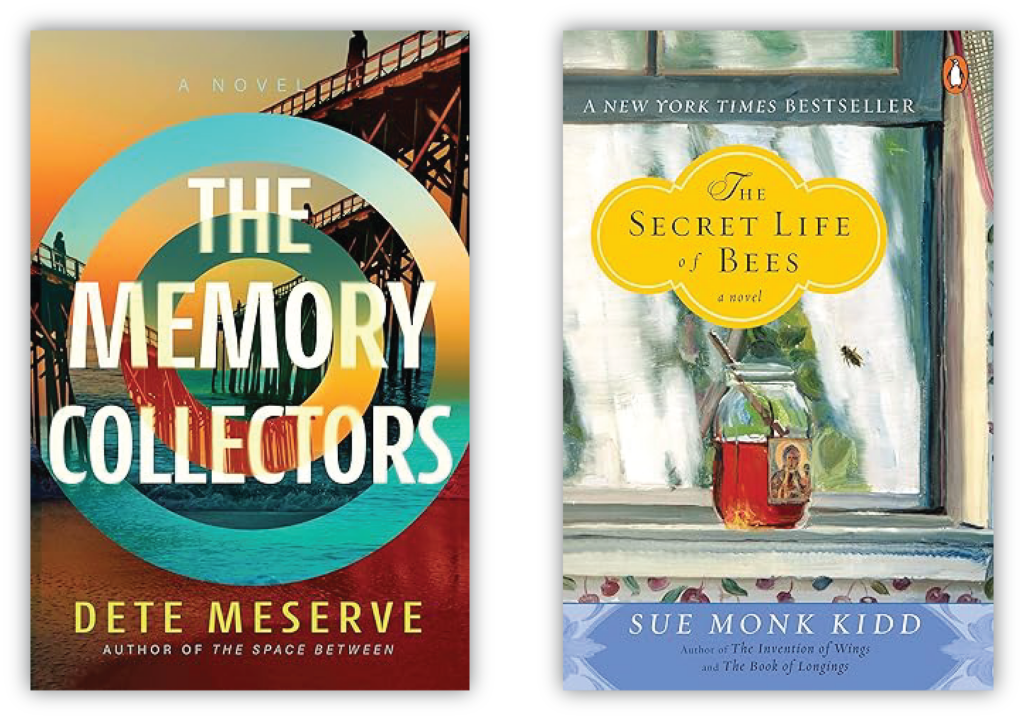
I read more for business than pleasure, collateral damage from my Ph.D., but two books from 2025 stand out. The Secret Life of Bees was made into a movie in 2008 with Queen Latifah, who shares my birthday. The Memory Collectors cleverly crafts modern life in a three-year span by asking “what if you could do it all over again” and putting free will and determinism in a two-way mirror. I should also promote my book,”Discovering Your Human Algorithm.”
If you missed a Fellows Spotlight, you can find them here.