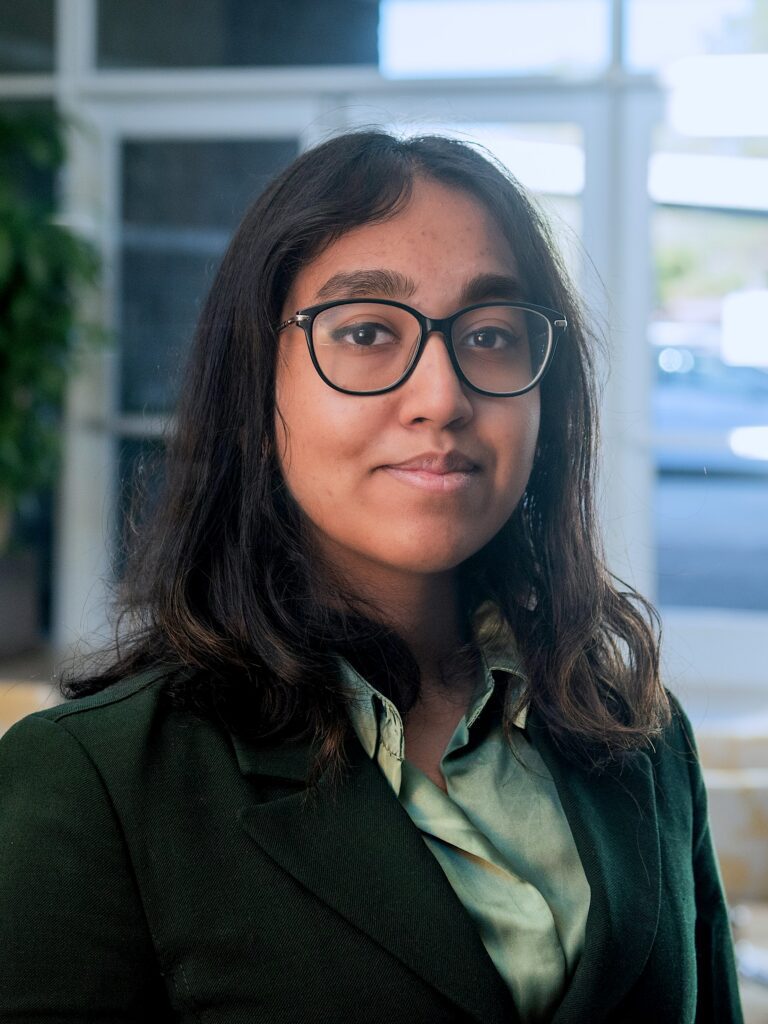
Ariana Rahman (Class of 2024) has been named a Goldwater Scholar, awarded to outstanding U.S. college sophomores and juniors who show exceptional promise as future research leaders in the fields of science, engineering, and mathematics.
The Goldwater Scholarship supports students at a critical stage in their academic journeys. It provides financial assistance as well as national recognition, helping scholars access further research opportunities, graduate programs, and professional networks.
The scholarship was created in 1986 to honor the legacy of Barry Goldwater, longtime U.S. senator from Arizona who had a deep interest in science and public service. Established by Congress, the program reflects a national commitment to investing in intellectual talent and innovation.
Rahman, who is studying biological and biomedical sciences and bioinformatics at Arizona State University, shared her reflections on what this recognition means and what she is most looking forward to in the experience ahead.
RELATED: 4 ASU students awarded Goldwater Scholarships for excellence in STEM research | ASU News
What first sparked your interest in biological sciences and ultimately led you toward pursuing an M.D./Ph.D.?
In my work on endometriosis, I keep coming back to the same question: how can something so common, so painful, and so disruptive still be so poorly understood and so hard to treat? That question stays with me. I hear from patients who spend years looking for answers, and then I go back into the lab to try and understand the immune pathways that might be driving that pain.
The M.D./Ph.D. path makes sense to me because I do not want to study disease from a distance. I want to build a career where clinical problems shape the questions I ask, and where research can return to patients as something useful.
Was there a specific moment or experience that clarified your desire to work at the intersection of research and medicine?
The clearest turning point for me was when I started doing tissue collection at Mayo Clinic. I get to meet patients undergoing surgery for endometriosis and then work directly with the tissue collected from those cases. Before that, tissue on a slide was still somewhat abstract to me. But after hearing patients describe years of pain and uncertainty, and then entering the operating room in a sterile gown to collect freshly excised lesions, the science became personal in a different way.
What keeps you grounded in the work that you do?
What keeps me grounded is that connection between the operating room and the lab. Some of the most meaningful moments for me have been realizing that the patterns I am seeing in immune analyses may connect back to what a patient is actually experiencing. That is when I understood what translational science really meant for me.
Looking ahead, what kind of physician-scientist do you hope to become, and what problems are you most driven to solve?
I hope to become a physician-scientist in immunology who studies immune microenvironments in diseases that have been historically underdiagnosed or undertreated, especially women’s diseases. I am especially interested in using computational tools alongside wet-lab and translational work to understand how immune signaling sustains chronic inflammation and pain, and then using that understanding to inform better therapies.
What does being named a Goldwater Scholar mean to you?
Being named a Goldwater Scholar means a lot to me because it connects me to the kind of future I want. I am early in this path, and so much of my undergraduate research has been learning by trial and error, asking better questions, and slowly growing into my own scientific identity. So being recognized at this stage feels meaningful because it affirms the work I have done and the direction I am trying to take.
How did the application process challenge or refine the way you think about your future in science and medicine?
The application process forced me to bring all the different parts of my experience into one coherent story. Before writing it all out, I knew I cared about research, medicine, and advocacy, but the process made me realize those were not separate interests. These interests point toward my ultimate goal of becoming a physician-scientist who uses interdisciplinary methods to solve problems.
How would you describe your research to someone outside of science?
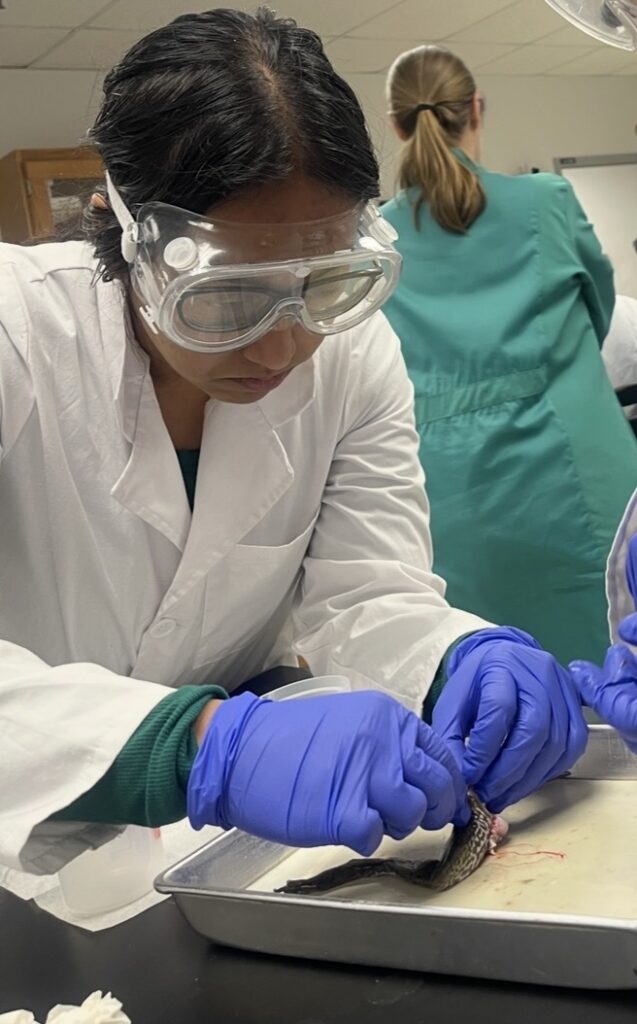
I would say that I study how immune cells behave inside diseased tissue and how those interactions may be contributing to pain and chronic inflammation. In endometriosis, my work focuses on structures called tertiary lymphoid structures, which are organized clusters of immune cells. I have been looking at how T cells and B cells interact inside those structures and whether those interactions are helping sustain the disease.
In simpler terms, I am trying to figure out whether the immune system is creating its own kind of harmful ecosystem inside the tissue–one that keeps inflammation going instead of resolving it. I use imaging and computational approaches to understand those patterns, with the hope that this could eventually point toward better diagnostics or treatments.
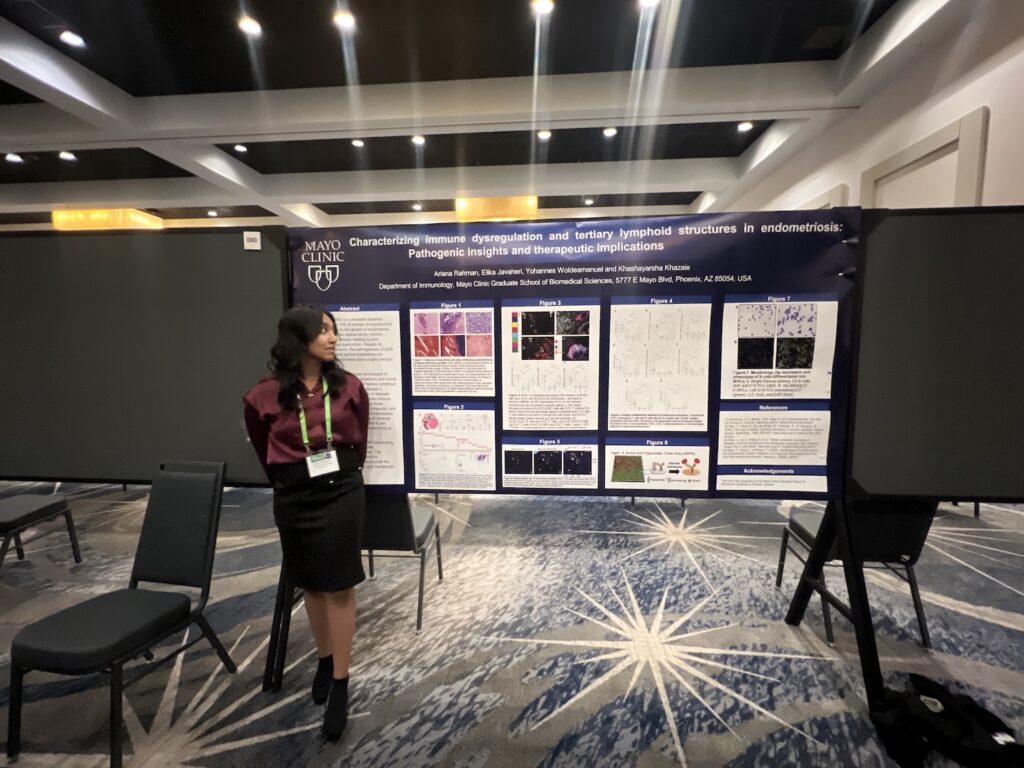
What has been the most meaningful takeaway from your experiences presenting at the American Association for Cancer Research conference?
It was incredible to be in a space where people were committed to moving this field forward. My biggest takeaway was that communicating science clearly is part of doing science well. A good project is not enough by itself; you have to explain why it matters, how you approached it, and what questions still remain. That experience made me more confident and also more aware of the responsibility that comes with presenting research publicly.
You participated in the Pfizer Futures Summer Research and Development Internship. What did that experience teach you about research in an industry setting?
The Pfizer internship taught me how different research feels when every question is being asked with scale and a product in mind. My work there focused on safety analytics for sickle cell disease treatments. It definitely felt faster-paced. In the lab, I’m often focused on understanding mechanisms in depth and following questions as they develop. At Pfizer, I saw how research operates when there’s a much tighter connection to timelines and team-based decision-making.
How has being part of the Flinn Scholars community shaped your college experience?
Being part of the Flinn Scholars community has shaped my college experience in a huge way because it surrounded me with people who are deeply motivated and supportive. Every Scholar’s drive pushes me to raise my own expectations, and the mentorship built into the program helps me navigate demanding research and academic opportunities with more confidence.
What do you do for fun outside of research?
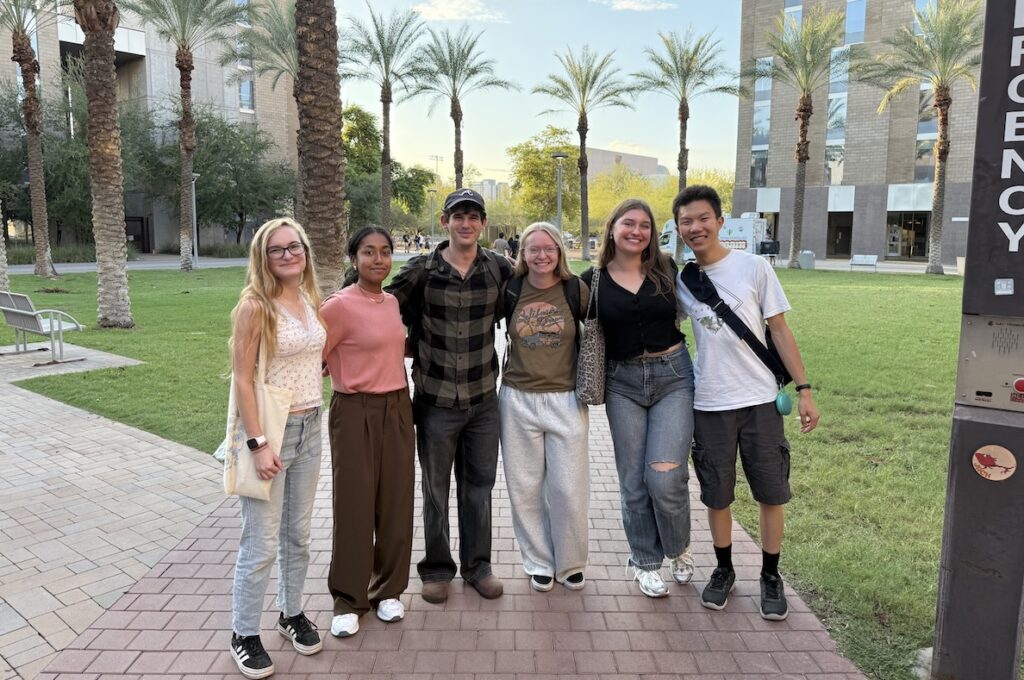
I really like writing poetry and climbing mountains! Whenever I get a chance to be in the outdoors without a chance of heatstroke, I take it.
With so many responsibilities, how do you prioritize your time and maintain balance?
I try to prioritize by asking whether something is actually in line with the kind of physician-scientist I want to become. A lot of my commitments matter to me because they all connect back to that same bigger purpose. Having that purpose makes it easier to stay committed, but it also means I have to be intentional about depth rather than just taking on more and more.