Class of 2005
Will you share a little about your current role and what excites you most about your work?
I am the deputy director at an arts nonprofit based in Tucson called Art State Arizona where I have worked for the past decade. The work is unique and allows me to wear many different hats throughout the year, and over the course of my time at the organization: nonprofit administrator, festival and event management, public art stewardship, venue management, statewide advocacy, public-facing directory management, gallery management, magazine publisher, booking and cultural programming, and community outreach. No week or day at this job has ever felt routine. I enjoy the entrepreneurial spirit of a smaller nonprofit, both the constant challenge, dynamic nature of the work, as well as the direct connection to the artists, audience, and community that we serve.
Our organization has been around for nearly 30 years, recently evolving out of the Southern Arizona Arts and Cultural Alliance (SAACA). Throughout our history, the throughline of the work has been creating arts and culture programming and fostering cross-sector collaborations throughout the state.
Going into my 10th year at the organization, a few projects I’m excited about:
- Providing meaningful leadership and sustainability plans for legacy cultural events like the Tucson Folk Festival (Arizona’s largest free-to-the-public music festival) and the Patagonia Fall Festival (going on 50 years).
- Supporting the next chapter of statewide arts advocacy and infrastructure in Arizona.
- Continuing to develop new technology tools to better connect our public-facing directory, storytelling and marketing goals, and operational databases.
(This is question one of this profile and we’re already sufficiently in the arts administration weeds! Buckle up fair readers.)
How did being a Flinn Scholar shape your academic and/or career path?
As I look back on my time as a Flinn Scholar, I can see that it both inspired and equipped me to take risks during my career path. A life in the arts is never a straight line, and I have always felt so much encouragement from the Flinn community to embrace that curving arc of discovery.
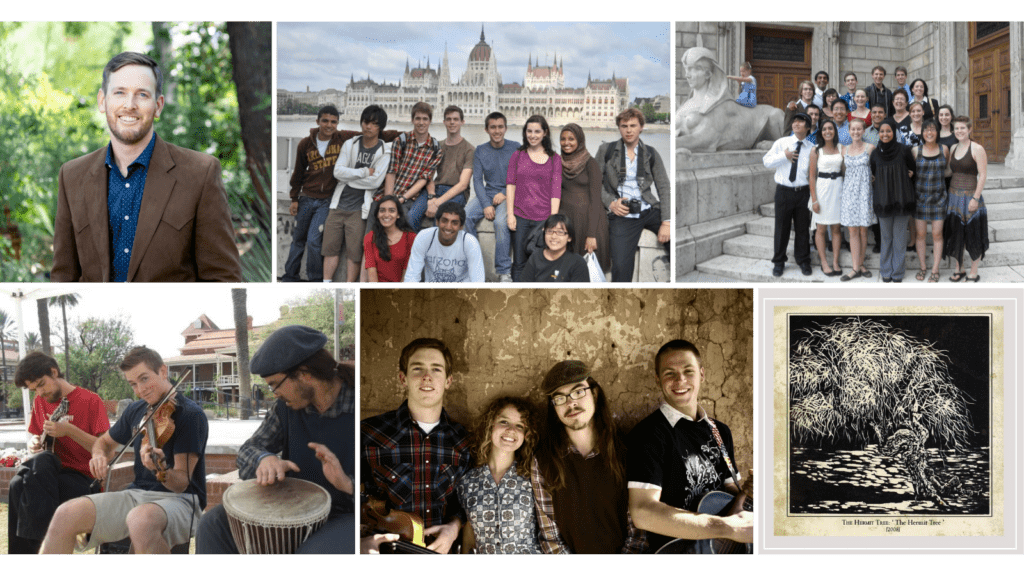
During my college years, I was inspired to think outside of the box. I give credit to the dozen or more Flinn Scholars around my cohort years that were doing incredible travels and work blending economic/social science and political work. I felt empowered to chart my own academic path through the International Studies program and Economics program at the University of Arizona and spent more than five stretches of time studying abroad. That led to a Fulbright fellowship post-graduation to pursue economics research in rural central Mexico.
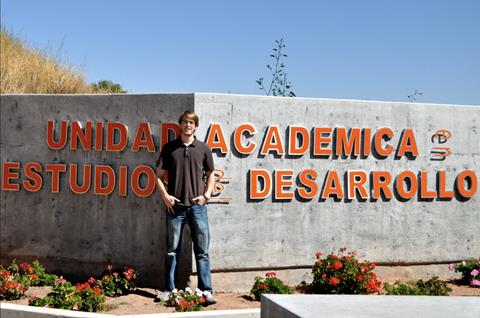
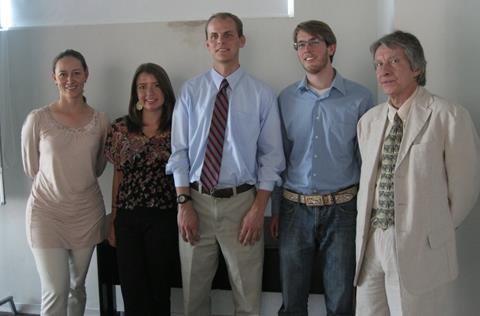
After 18 months in the commercial finance world, I took an abrupt right turn to pursue music full-time, which took me across the country for about five years. That eventually landed me in the arts administration world, where I have worked for the last decade.
Early on, the Flinn Scholarship provided me the financial means to take academic leaps, pursue global travel, as well as the community inspiration and encouragement to see creative paths forward.
Is there a project, achievement, or experience you’re especially proud of?
When I first came to Tucson in 2005 for my Flinn Scholarship, the very first large public festival I attended was the Tucson Folk Festival. I fell in love with the grassroots feel of the music festival and was amazed at the scale of the event. Each year, the free-to-the-public festival features more than 100 performances and 400 musicians during a jam-packed weekend of original and hand-crafted music experiences.
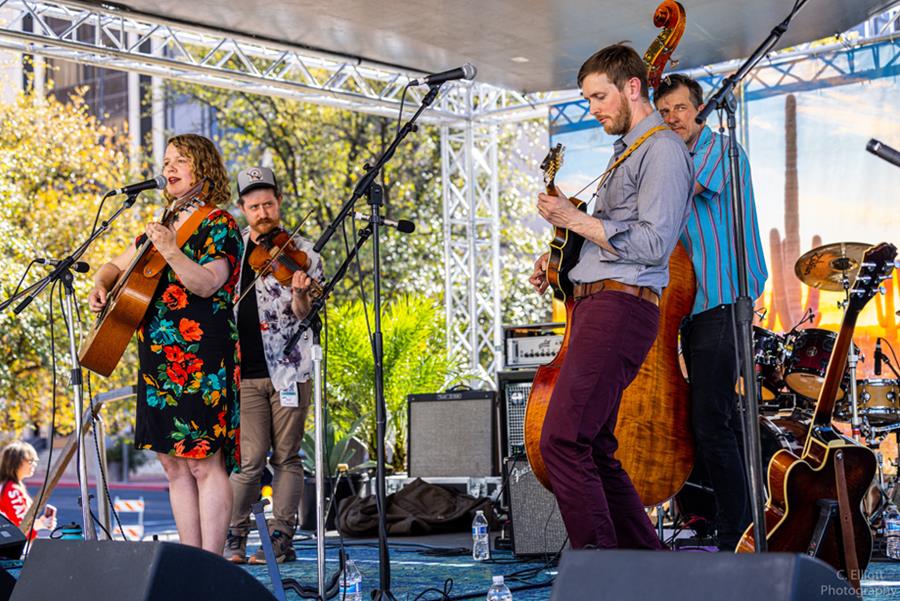
In 2018, I joined the festival board, in part, to give back to the presenting nonprofit organization that had done so much for my band’s musical growth. In 2020, I agreed to become board president to help the festival navigate pandemic-era challenges and to chart a path for the next chapter of the organization.
In the last five years as board president, the festival has grown in significant and meaningful ways. We’ve developed new layouts; built up financial reserves; found new significant sources of grant and sponsorship support; added more stages; greatly improved our stage, sound and festival production; expanded and diversified our headliner performances; built an online and national brand; and developed a staffing and board infrastructure to help sustain this growth.
As I step out of the board president role this year after six festival seasons, I will be focusing my support on helping the new leadership continue this growth.
While it’s hard to put in a few words the behind-the-scenes changes, most long-time attendees and performers at the event express pride and excitement for this growth. The festival feels new, while retaining so much of the grassroots character that makes it distinct. This sense of community ownership is what makes me feel most proud.
I always laugh when I think back to one of my good friends who brought his 8-year-old son to the festival the first year we were back in full production. His son asked, “This is what you do for your job? That’s great. You only have to work one weekend a year!”
How do you stay connected with the Flinn community today?
I feel fortunate that in my case, my Flinn community evolved into a literal family in several ways. My wife’s cousin is a Flinn (and a former college housemate), who is also married to a Flinn, and one of my closest college friends and fellow Flinn has continued to be a close family friend as we’ve entered the child-rearing years. His kids have become favorite babysitters.
Outside of this immediate family circle, I enjoy reading the alumni newsletter, and try to make at least one alumni gathering a year. I’m more or less retired from social media as a grey hair-tinged millennial, so I appreciate the work the Foundation team does to keep us connected in other ways.
Looking back, what’s one lesson from your time as a Flinn Scholar that has stayed with you?
For this one, I’m going back to a letter I wrote to Michael Cochise Young after graduation. For those that didn’t have the pleasure of knowing Dr. Young, she was the Flinn Scholars program director during my college years. As I re-read this note, her advice of how to approach building a community and finding new connections has seen me through several life periods and still rings true. Sometimes all it takes is a small connection to start a new relationship, and sometimes it is easiest to step into the next chapter by finding just one personal bridge. Thank you, Michael!
I’ll never forget one of the first pieces of life advice you shared with me at a coffee hours in 2005. I was wrestling with developing new friend circles in college and the challenge of establishing a new community. You encouraged me to look for the “nodes of connection” that can link us with new people. In my case, those nodes became new musical outlets, new academic interests, and traveling pursuits. I soon realized that these nodes that I trusted and embraced were not only connections with new friends, but pursuits that would define my personal development. Those nodes, once established, never fully disintegrate.
What impact do you hope to make in your field or community in the coming years?
The Arizona arts funding landscape is a complicated ecosystem. While there are large and meaningful channels of philanthropic, foundation, and corporate support for the arts, the fact remains that Arizona overall consistently ranks among the lowest in the U.S. for public arts funding.
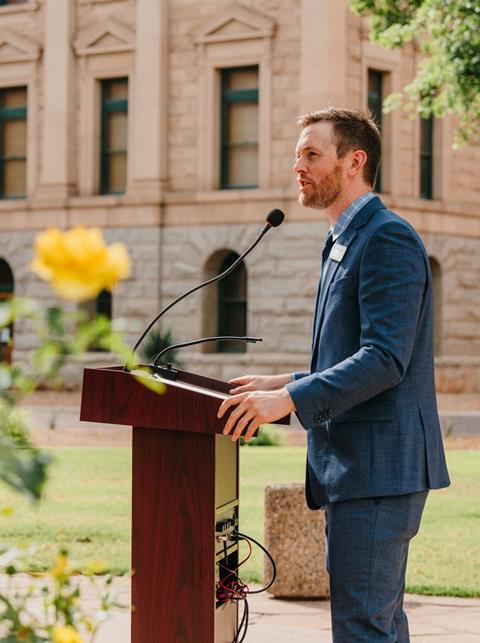
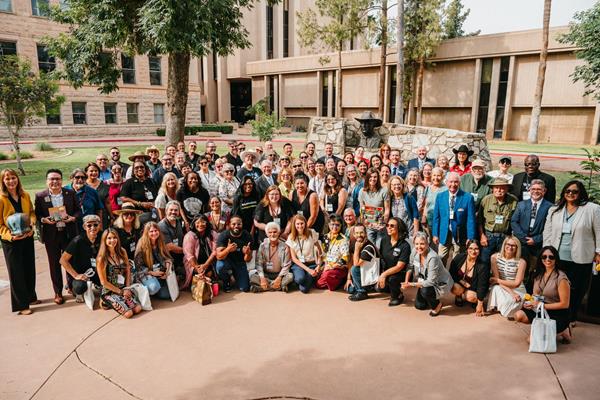
Most people do not know that Arizona has a state agency dedicated to supporting the arts, but relies on unpredictable, one-time annual appropriations to continue to exist. I believe our state arts agency does incredible and impactful work, and is an essential part of our state’s economy and cultural infrastructure. I hope to see this state funding become more predictable and stable so our state agency can flourish and exist in a less volatile space.
On a more regional level, I would love to see more cities or towns in Southern Arizona incorporate a full- or part-time staff person to support arts and culture strategic planning into their municipal system. While most cities in the Phoenix metro area commit millions of dollars to arts and culture programming, venues, and staff, there is only one government staff person, to my knowledge, south of the Gila River that has “art” in their job title or direct responsibilities. I hope that changes within the next five years.
What’s one unexpected skill you picked up during college that you still use today?
Packing a suitcase, a seriously underappreciated art form!
Pack too much, and you’re grumbling every literal step of the way. Pack too little, and you’re grumbling every time you end up at a fine evening event like a symphony performance sporting inside out socks and tennis shoes.
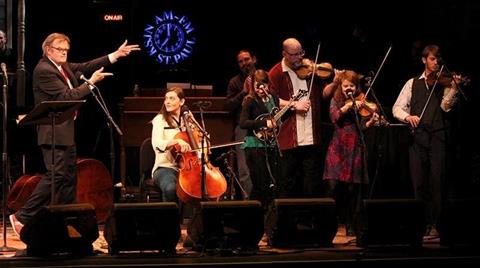
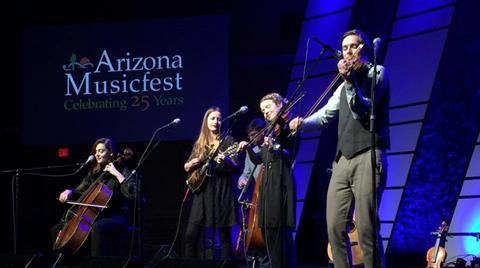
For backpacking, there’s the art of making the essential accessible without catapulting personal items on the side of the trail or airport waiting area. And then there’s the later-acquired skill of finding a way to pack shirts and pants to make fold lines magically disappear. On the tour band life, I learned the importance of the one-week rotation, learning the exact minimum of items I needed to get through a week of shows and travel life, and then reset.
And always bring a towel (for my interstellar hitchhikers out there).
What’s the most surprising way your Flinn experience has popped up in your life post-college?
I was surprised and thrilled to have the chance to help produce a 40th Anniversary Flinn Scholars retrospective gallery project for the Flinn Foundation in 2025. The collaborative project brought together Flinn Scholars, Flinn Scholar artists, and other Arizona artists to create a very unique, multi-media reflection on the Flinn Scholarship program for the Foundation conference spaces. The experience prompted me to reflect on my own scholarship experience, and challenged me as a musician and as an artist to interpret someone else’s story (thanks, Roger Levy!).
What’s something you’re currently learning, exploring, or curious about?
The past few years have taught me the importance of hobbies to maintain a balanced life. Here are some of my weekend pursuits that help me reset and focus on family. Gardening. We moved to a new house last year, so currently building out the pollinator friendly sections of the new backyard and putting in some edibles, like figs, pomegranates, and feijoa. This past year, I’ve also been reading more about rainwater harvesting and implementing some home strategies (as the spine and weekends allow). Cooking is an ongoing pursuit. This past year, I became the primary dinner cook, which forced me to get a whole lot better at the weekly meal prep and planning side of things. Although dinners tend to stick to being friendly to the 2- and 4-year-old palates, it’s still encouraged me to get a lot better at cooking our proteins, and understanding the chemistry and timing side of sauces.
What book, podcast, or piece of media has changed how you think in the last year?
Dylan Goes Electric! (book) / A Complete Unknown (movie)
I enjoyed James Mangold’s directorial adaptation of this retrospective book of the 60s era Folk music scene by Elijah Wald. In my case, the movie led me to the book, but I’d happily recommend both. Because of my years touring as a folk music musician, there was a lot to digest and appreciate personally.
The most interesting part of the stories for me was coming to a deeper appreciation of Pete Seeger —a community builder, festival organizer, proponent of the ‘traditional’ but also avid re-interpreter of source material. The book helped me look at my own artistry in a new historical light, articulating well many of the artistic decisions and tensions I’ve faced over the years. There’s nothing more satisfying than reading a bit from a good writer and shouting “EXACTLY!”. A good phrase captures so many feelings and ideas like an invaluable vessel. I had several of those moments reading this book.
How have you maintained your connection with the Flinn Foundation?
When I was touring full-time with my music project from 2013 – 2017, one of the greatest joys and surprises was reconnecting with Flinns across the country. The shows often became spontaneous mini-reunions. Now that I’m not in that phase of life, I feel lucky to have shared so many of those evenings with my Flinn friends. It was a snapshot into their lives, and so much better than a social media update. Those mini-reunions also helped avoid a few too-empty nights in music venues on a weekday in a first-time city. So THANK YOU!
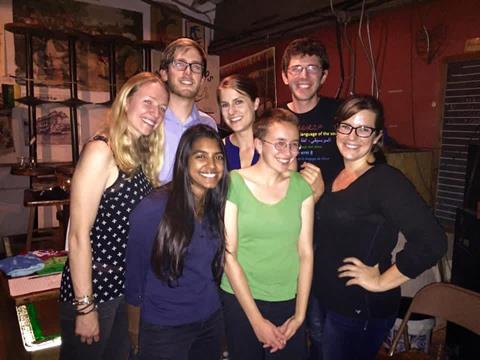
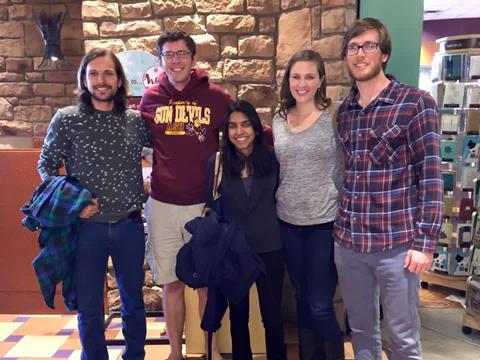
I also enjoyed serving on the Flinn Alumni Council for a few years and participating in various ways supporting the scholarship program — life hack days, first-year care packages, application review, and helping organize a few alumni gatherings.
If you were going to make a Flinn memories mixtape or playlist, what would you put on it?
Music was such a big part of all my college Flinn trips. From group playlist sessions on bus tours in Hungary / Romania, to summer talent show, to carpool drives to northern Mexico for Tucson Flinn trips. If I were going to make a playlist of Flinn nostalgic songs, here a couple of memory-lane hits it would include:
The Dubliners – “Spanish Lady”
Daft Punk (“One More Time”, “Harder, Better, Faster, Stronger”, “Technologic”)
Muzsikás – “Szerelem”
Boney M – “Rasputin”
Tom Petty – “The Apartment Song”