Bioscience

Once uninspired student, ASU math professor finds passion in teaching

Once uninspired student, ASU math professor finds passion in teaching


Rheyanne Weaver, ASU State Press, March 9, 2010

Source: http://www.statepress.com/2010/03/09/asu-mathematics-professor-from-low-income-l-a-high-school-excelling-in-ariz/


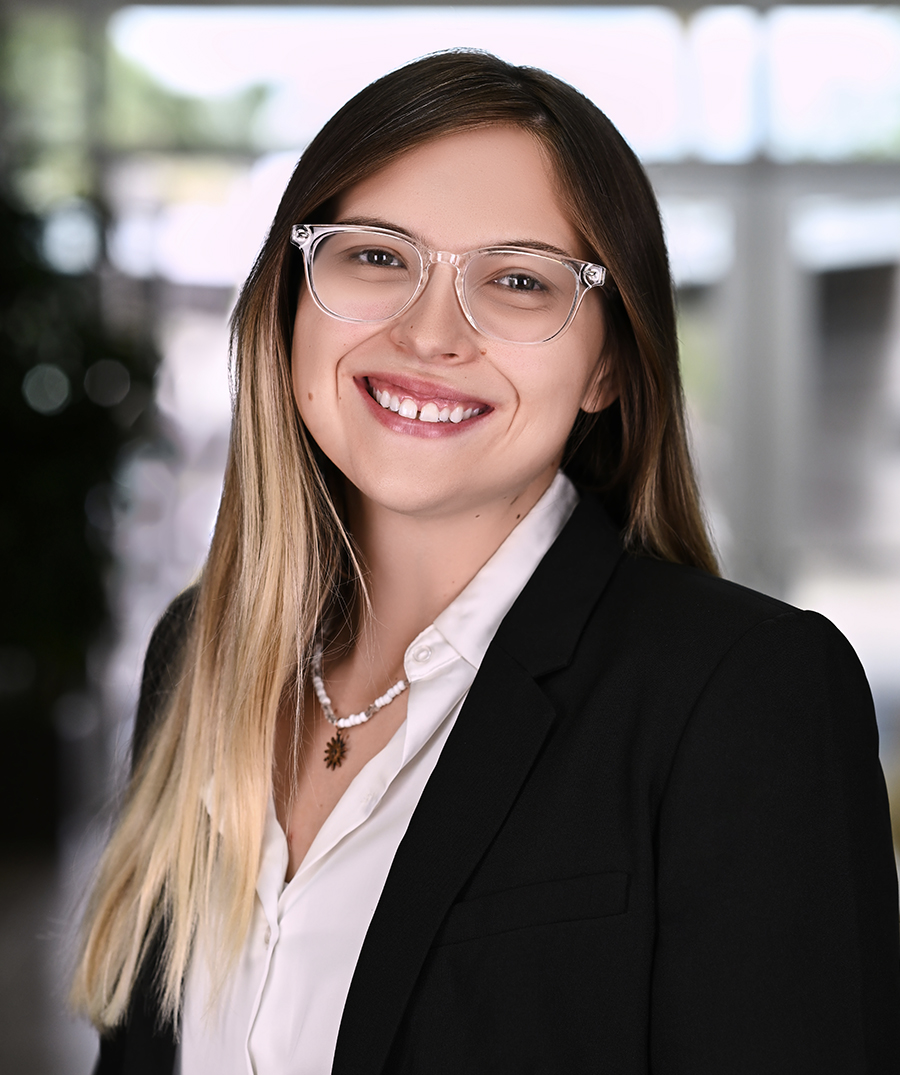
 Erika Camacho never planned on going to college or becoming a professor.


“College was not one of the possibilities that I saw in my future,” said Camacho, an assistant mathematics professor in the Division of Mathematical and Natural Sciences at the West campus.


Her perspective changed when she was encouraged to consider college and a career in mathematics by her high school algebra teacher, Jaime Escalante.


Camacho went to James A. Garfield High School in Los Angeles, where most students were from low-income families.


Escalante is known for his work to increase the number of high school students who passed the Advanced Placement Calculus test, which inspired the 1988 film “Stand and Deliver.”


“If he wouldn’t have inspired me, I probably wouldn’t have gone to college,” Camacho said.


The only career goal Camacho had in high school was to do well, graduate and get a “good job” as a store cashier.


If she worked as a cashier, she wouldn’t have to clean bathrooms or do similar jobs, she said.


“It was not that education was not valued,” Camacho said. “It’s just that when you’re poor, sometimes putting food on the table is more important than getting a degree or graduating from high school.”


Camacho was the first in her family to attend college and had some difficulty adjusting to college life and holding four jobs.


“I realized there was a gap in my education, so I was spending more hours than my peers studying,” she said.


Camacho managed to keep in contact with Escalante during some of her college years and said he helped get her through tough times.


Since Escalante was a math teacher, Camacho said his focus was to instill in students a love for mathematics.


“He would always make sure that we understood that with math, you could pretty much do anything,” Camacho said. “To be able to understand mathematics opens many doors.”


Math plays a role in many different fields, which Camacho said is apparent in her mathematical physiology research.


The work includes trying to understand the causes of certain degenerative eye diseases.


Camacho is also interested in mathematical sociology and is working to create models for social problems and phenomena.


Connie McNeely, a quantitative sociologist from George Mason University, is collaborating with Camacho on a project that would create a model and understand the impact the migration of science, technology, engineering and mathematics individuals could have on the U.S. and world.


“You see a lot of science, technology, engineering and mathematics high-skilled workers migrate from one place to another,” she said.


At first, Camacho wanted to be a high school teacher, then she became interested in engineering and eventually changed her focus.


She ended up double majoring in economics and mathematics at Wellesley College, but later earned her doctorate from Cornell University in applied mathematics.


She went to school at Cornell because of her experience during the summer at the Mathematical and Theoretical Biology Institute, which later moved in 2004 to ASU and is directed by Carlos Castillo-Chavez.


“[Castillo-Chavez’s] whole passion for helping students that were in need … really impacted me in a very strong way,” Camacho said.


Her experiences with inspirational mentors and teachers led her to become one herself.


Camacho helped start a similar summer program at Loyola Marymount University, called the Applied Mathematical Sciences Summer Institute, and still helps with the Mathematical Theoretical Biology Institute.


“One of the main goals of MTBI is to get students to graduate school — to get them interested in graduate school,” Camacho said.


Emmanuel Morales, an applied mathematics doctoral candidate, first met Camacho through the MTBI program and later worked on research with her.


Morales is working to develop a mathematical and statistical model to estimate the prevalence of drug injection users, a problem in his home country of Puerto Rico.


“She criticized me a lot and because of that, I think I end[ed] up with a good model,” Morales said.


Roger Berger, director of the Division of Mathematical and Natural Sciences, has known Camacho since she came to ASU in 2007.


“She’s very passionate about making mathematics accessible to people from very diverse backgrounds,” Berger said.


Educators say Governor

Educators say Governor’s proposed state budget would cripple Career & Technical Education programs


Naomi Hatch, AZJournal.com, February 24th, 2010

Source: http://www.azjournal.com/news/126/ARTICLE/5121/2010-02-24.html


The governor’s budget is causing concern for Career and Technical Education (CTE) programs. The proposed cuts will leave $57,700 of the $11,492,700 in the Vocational Education Block Grant.  This could have an impact on the Snowflake School District, because if that grant is cut, the district will also lose a federal grant, explained Superintendent Hollis Merrell.  “It could potentially impact NAVIT (Northern Arizona Vocational Institute of Technology),” he said.
    

Merrell explained that for every dollar school districts receive through State Education Block Grant funding, an additional $2.34 is received from Carl D. Perkins federal funding, so this could take $25.9 mil-lion of the Carl D. Perkins funding from the CTE program in Arizona. The state has to show maintenance of effort in order to receive the Carl D. Perkins grant, and would not be able to do so if the block grant was cut. The loss of these funds could potentially force schools involved with NAVIT to close programs, and cause similar problems throughout the state.
    

The potential loss would include $11,492,000 in state funding and $25.9 million from federal Carl D. Perkins funding for a total of $36.9 million statewide. “Certainly it would negatively impact us,” said Merrell, noting it could cause them to close programs because there would not be adequate funding.  
    

Classes offered in the district that would be affected include agriculture and Future Farmers of America, information technology (Cisco networking), digital media (broadcasting), business, construction trades, graphic arts, and graphic design.
     

All NAVIT classes would be affected, including cosmotology, health related occupations, auto, fire science, education professions, and several others.
    

Alan Ramage, CTE director for the Snowflake School District, said that the district has $92,730.64 al-located block grant funds for fiscal year 2009 and $41,341.81 allocated for the 2010 fiscal year.
    

He noted that there are 522 students in the district participating in CTE classes, with 76 students having taken a course for two or more consecutive years in a particular class. There are 4,287 participating students in the 10 school districts in Navajo County that participate in CTE.  Without these funds, it will become very difficult to offer these programs.
    

There are 1,670 CTE program courses offered in 72 occupational programs for 104,628 students in 328 high schools and 137 school districts in Arizona.  Arizona provides 15 percent of the Carl D. Perkins federal funds to 10 community college districts in Arizona that have 44,610 occupational students who complete 12 credit hours funded through these funds.
    

Students participating in these programs can graduate from high school with a trade and they could earn 12 college credit hours upon completion. The proposed funding cuts could cause the loss of those pro-grams.
    

Statistics show that 94 percent of the students who complete a CTE program meet or exceed the Arizona Instrument to Measure Standards (AIMS) reading standard, 92 percent meet or exceed the AIMS math standard, and 95 percent meet or exceed the AIMS writing standard, which exceeds the scores made by other students in high school, and 68 percent of students completing a CTE program last year were placed in community colleges, jobs or in the military.
    

Standards for the CTE programs are created by the industry, and the National Report Card for Education published by the U.S. Department of Education gave a grade of A- for Arizona Standards and Assessments, including both CTE and academic activities.
    

Loss of these programs could also cause a loss of jobs held by secondary CTE administrators, staff and teachers.  “What I’ve heard today (Feb. 18) is that they are getting the message,” said Merrell, noting legislators have heard from plenty of people who want to keep the CTE program.
    

You are encouraged to contact state legislators to express your concerns at http://www.azleg.gov/alisStaticPages/HowToContactMember.asp.  For more information on this issue, go online to http://www.acova.org

Attend the 2010 Mesa CC Biotechnology Symposium & lab tour, April 24

Attend the 2010 Mesa CC Biotechnology Symposium, lab tour, April 24


Saturday, April 24, 2010
8:30 a.m. - 3 p.m.
Mesa Community College

KEYNOTE SPEAKER

Ken Hoober, Ph.D., Susavion Biosciences and Professor Emeritus Arizona State University

MEET THE SCIENTISTS
Scientists from the CRO industry discuss the day to day lives of scientific professionals. Panels include participants from multiple aspects of the industry.

FACES OF SUCCESS
MCC Alumni return to campus to share their experiences. Panelists include employees of local biotechnology firms as well as students attending NAU as part of the 2+2 biotechnology pipeline.

UNDERGRADUATE RESEARCH PRESENTATIONS
Students performing research at MCC present the results of their work. Presentations will include studies from a variety of disciplines.

POSTER SESSION

TOURS OF THE MCC BIOTECHNOLOGY LAB

REGISTER TODAY!

FOR MORE INFORMATION AND TO REGISTER FOR THIS EVENT PLEASE VISIT THE MCC BIOTECHNOLOGY PROGRAM WEBSITE AT http://www.mccbiotechnology.net/bios AND CLICK ON 'REGISTER FOR EVENTS"

[IF YOU ARE PLANNING ON ATTENDING THE EVENT YOU MUST REGISTER VIA THE WEBSITE]

Event Organizer: Stan Kikkert (mailto:[email protected])

Arizona Academic Decathlon seeks funding after cuts

Arizona Academic Decathlon seeks funding after cuts


Ray Parker, Arizona Republic, March 1, 2010

Source: http://www.azcentral.com/arizonarepublic/local/articles/2010/03/01/20100301decathlon0301.html


For 25 years, Arizona's Academic Decathlon has pitted the best and brightest students in a contest of the mind. This year, it will involve more than 1,000 students from 100 high schools across the state. But next month's state finals may be bittersweet, and the next year's may be just plain bitter.


The Arizona Department of Education has cut $82,400 from the program, or slightly more than half of the event's total budget, which could kill scholarships or even sink the program entirely.


An anonymous supporter has promised $10,000 in matching contributions from any new donors by March 31, but in the current economy, $80,000 is a tall order.  "We have enough in reserves for this year," said Anne Edelstein, the AAD executive director. "We'll continue to fundraise for next year, maybe have team fees…but we may not be able to raise it."


Schools of all forms participate, whether public, charter, private or parochial. Last year, about 170 Arizona students received nearly $150,000 in college scholarships.


Each year, the organization chooses a theme - this year it's the French Revolution - and the students focus on the topic.


Decathletes, 50 percent of whom are minorities, are challenged to use analytical skills, performance abilities and test-taking in 10 subjects: art, economics, essay, interview, language and literature, math, music, science, speech and the Super Quiz (social science).


The program is both a class and an after-school activity for many participants, who are divided into three categories: students with a grade-point average of 3.75 or higher; 3.0 to 3.74; and below 3.0.

The competition culminates in the Super Quiz, where contestants go head-to-head in answering questions, while their supporters cheer them on.  "In 15 years of education, I have never found a program with the kind of potential… to push students to new limits," said William Kibler, AD coach at Cesar Chavez High in Phoenix.


"To an outside observer, the tests may seem to be a mere compilation of trivia and facts about the year King Louis XVI was beheaded or the first book written by Rousseau or the primary patron of Joseph Haydn. In reality, Academic Decathlon uses these obscure details to teach students how to learn and learn at a greater depth than the students ever thought possible."


The Arizona Academic Decathlon finals will be held March 12-13 at Sandra Day O'Connor High in Phoenix. Two events are open to the public on Saturday: the Super Quiz at 1:45 p.m. and the awards ceremony at 5:30 p.m.


The winning team will compete at the national competition on April 21-24 in Omaha, Neb.

Act now to attend nation

Act now to attend nation’s premier bioscience education training program for teachers


The Biotechnology Institute is accepting applications for the 2010 National Biotechnology Teacher-Leader Program, the nation's premier training program for teachers who want to bring state of-the-art biotechnology education to their classroom!


Application deadline is March 31!


What: The Biotechnology Institute's National Biotechnology Teacher-Leader Program, a five-day hands-on training program offering teaching strategies linked to education and skills standards.  The program tuition includes:


·        Sessions that incorporate standards-based biotechnology into the curriculum

·        Best Practices Day with exemplary sessions from around the world

·        Networking with colleagues and industry leaders

·        Full convention access to the BIO International Convention

·        Special events with renowned scientists

·        Visits to biotechnology companies

·        Certification as a Teacher-Leader in biotechnology education  

·        All materials, books, and supplies

·        Airfare

·        Downtown Chicago lodging

·        Attendance to the Biotechnology Education Banquet

·        One year of individual membership in the Biotechnology Institute


Who is eligible: Educators at middle schools, high schools, and two-year colleges who are actively engaged in teaching students life science and biotechnology.


When: Friday, April 30-May 4, 2010, Roosevelt University, Chicago, IL


How to Attend: Most participants are sponsored by their school districts or organizations and corporations in their communities.  Teachers are responsible for finding their own sponsorship, although sponsorship guidance and group discounts are available.  The Institute has a limited number of scholarships available.   For consideration, please submit a full registration packet to the Biotechnology Institute. For assistance with sponsorship, please contact Scott May, [email protected], 571.527-3256.  The program fee is $5,500. 


For more information and an application, visit http://www.biotechinstitute.org/programs/t_leader_program.html.

Nominate an Arizona STEM education

Nominate an Arizona STEM education “Innovation Hero” today


Innovation Heroes are educators and students who are making significant strides in science, technology, engineering, and math education.  Innovation Heroes are from schools anywhere in Arizona, in metro or rural parts of the state, and can be nominated by anyone -- fellow students, teachers, parents, administrators, or members of the community. 


Innovation Heroes is one of Science Foundation Arizona's most popular community outreach programs, as winners are not only recognized for their outstanding achievements, but also awarded a monetary prize for their work ($500 for teachers/educators and a savings bond worth $1000 for students).  It is a way for us to highlight STEM successes in our state and showcase the schools and individuals responsible for great things that are happening in Arizona education every day. 


For more information about the criteria and to submit a nomination, visit the SFAz website and download the Innovation Heroes form.  Simply fill it in, complete the brief essay portion, and send it back to us at [email protected].  The program is ongoing and statewide, so the more nominations SFAz receives, the more winners SFAz can honor. 


If you have any questions or need more information on Innovation Heroes, contact Darcy Renfro at [email protected] or Caroline VanIngen-Dunn at [email protected].

Video produced on STEM, bioscience education in the East Valley

Video produced on bioscience education in the East Valley


Mesa Public Schools has produced a 23-minute video on STEM education in the East Valley.  The first half of the show focuses on the Mesa Biotechnology Academy.  The second half of the show highlights “Project Lead the Way” at MVHS and RMHS.  The video, available online 24/7, can be viewed here: http://www2.mpsaz.org/edtv/ondemand/cte/video/3866

Support sought for innovative southern Arizona STEM teacher internship program

Support sought for innovative southern Arizona STEM teacher internship program


SALC and Science Foundation Arizona need your support for one of the most innovative internship programs in the country. The University of Arizona heads up the program as a major initiative of Tucson Values Teachers (TVT) and the University of Arizona. The program features a master’s degree for middle or high school science or math teachers, and includes a 6 – 8 week paid summer internship in a local business.


The program, the only teacher internship program in the country linked with a Master’s degree, is made possible through a grant from Science Foundation Arizona, with the salaries paid by local businesses making up the required matching funds. Funding from Science Foundation Arizona cover 75% of each teacher’s tuition at the UA for the Master’s program.  Participating businesses include Raytheon, Texas Instruments, General Plasma, Beach Fleischman and Fort Huachuca.


The program launched last year and has proved of great benefit to both the teachers and businesses. Every participating business in 2009 reported great benefit from having a highly skilled professional in their workforce. In addition, the UA program works to incorporate these integrated skills into the curriculum. Every business from 2009 has returned in 2010 with high praise for the program, and for the individual teachers they employed last summer. Every business wanted “their teacher” back in 2010.


We have funding for eight additional slots in 2010, and we invite you to be part of this program. Each business pays the intern industry wages, which on average has totaled between $5000 and $10,000 for the 6 – 8 week session.  This year’s summer session will begin the last week of May and run through early August, depending on the schedule of each teacher’s school district. In addition, each business is provided at least two teacher resumes and the opportunity to interview the candidates.


Southern Arizona is leading the way with this innovative program, which is central to SALC’s educational focus. For additional information on how you can benefit from a highly qualified K-12 teacher this summer, contact TVT’s Executive Director, Jacquelyn Jackson, at 520-327-7619 or at [email protected].

New Center for Applied NanoBioscience in Arizona targets personalized medicine

Diseases will be diagnosed more effectively and sooner through the work being done at the new Center for Applied NanoBioscience and Medicine at the University of Arizona College of Medicine - Phoenix in partnership with Arizona State University. 


Led by internationally noted biochemist and physicist Frederic Zenhausern, PhD, MBA, the center, the first at the College of Medicine - Phoenix will focus on personalized medicine, changing the way individuals are diagnosed and treated for the most deadly and debilitating diseases. 

INSYS Therapeutics, Inc. announces positive efficacy trial results

INSYS Therapeutics, Inc. announces positive results from the pivotal phase III efficacy trial for patients utilizing the Fentanyl Sublingual Spray (SL Spray) technology to treat breakthrough cancer pain.  All primary and secondary endpoints were achieved in the study, and the drug is the first product to ever show statistically significant pain relief when measuring the summary of pain intensity difference at five minutes (SPID(5)) in a phase III breakthrough cancer pain trial using Fentanyl.

The primary endpoint of the study was to measure the summary of pain intensity difference at thirty minutes (SPID (30)) compared to placebo.  INSYS’ SL Spray significantly improved mean SPID (30) scores compared with placebo (p<0.0001).  The SL spray significantly improved mean SPID values compared with placebo as early as 5 minutes (p=0.022), while all other endpoints starting at ten minutes showed the p value remaining at or less than 0.0001.  Given breakthrough cancer pain’s rapid onset and often peak intensity at three to five minutes, it is vital to provide patients with a faster onset of action. 

1 2 167 168 169 170 171 418 419